HR Project Management Skills are Powerful Tools–Do You Have Them?
When you look at a list of key HR competencies, one thing that often is lacking is a good set of project management skills. While it’s easy to try and segment the human resources profession away from the project manager role, I see it as a core part of what we have to do. Today we’ll go over some of the key aspects of HR project management, what it is, where it fits into your career, and how to use it.
What is HR Project Management?
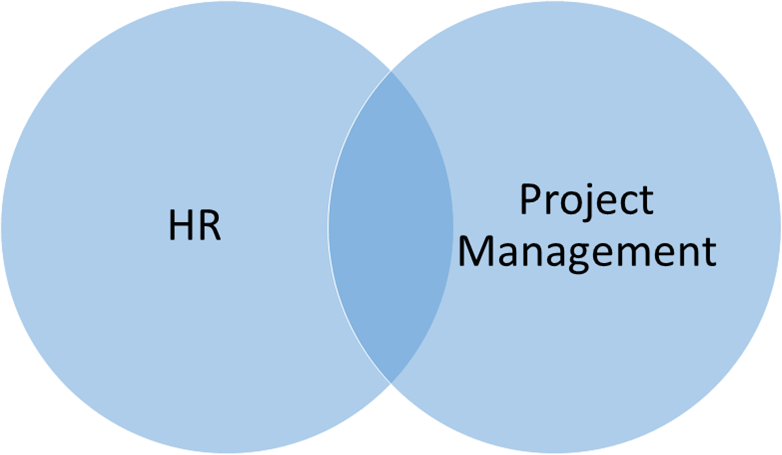
It is very much what it sounds like–the use of project management skills for HR projects/purposes. Think about some of the key skills a project manager has that we value from an employer standpoint:
- Managing a budget
- Managing a timeline
- Managing people/resources
- Ensuring stakeholders are in the communication loop
- Developing change management plans
It’s difficult for some people to do one of those well, and a good project manager can handle all of that and more. So it’s easy to see how we can use those types of skills to our advantage in a human resources role. The various projects we have to carry out (some examples of those are listed below) need good project management principles to guide them and ensure their success.
HR Project Management Examples
The easiest way for me to understand a concept is through examples of seeing it in action, so I thought we could go through a few to explore the aspects of this competency. These are just a surface glance and not in depth, detailed project plans, but it’s still a good look at how the disciplines work together.
Benefits Change
Scenario: Benefit costs with current providers have become untenable. Management has requested evaluation of other providers to reduce costs, even if it means reducing the level of quality.
HR Project management role:
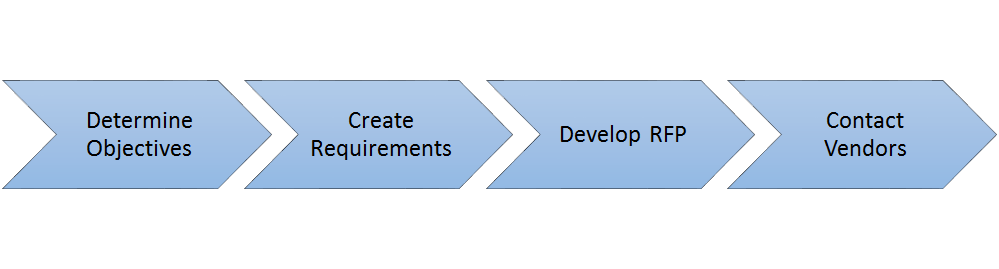
- Work with management to establish specific objectives (how much cost reduction? how much quality deterioration is acceptable? what is the timeline? etc.)
- Develop a set of requirements from those objectives. That set of requirements will be the foundation for your RFP (request for proposal) that you use when talking to vendors.
- Contact vendors with the RFP, collect bids, and make a selection based on key factors (price is key in this example).
- Complete transition to new provider, terminate relationship with previous vendor, and continue post-implementation activities.
HRIS Implementation
Scenario: Your company has been growing and is ready for a new HRIS to help maintain employee records and facilitate some of the HR processes that occur. You have gone through the selection process and are now in the final stages leading up to implementation of the system. You know that it’s critical to get this last step correct in order to hit the ground running. The program will mainly be used for HR purposes (you and one other team member), but there is a manager self service portion as well that you expect to use to reduce time spent answering questions from managerial staff.
HR Project management role:
- Work with the provider as soon as you have a working version to learn the ins and outs of the system. If you are doing the training for other staff instead of the provider, make sure you go through the process of using the tool like one of the other staff. For instance, log in as a manager and use the self service portion so you fully understand the capabilities.
- Develop a training plan for educating all pertinent staff on the operation of the system, including the need for security and compliance with data.
- Work with provider on a launch plan. This could include dedicated support from the provider, especially in the early days when many new users need assistance.
- Develop a feedback system so that users can funnel questions, requests, etc. back to you.
Transitioning to Shared HR Services
Scenario:
Your company has had embedded HR generalists in business units for the past several years. Over that time it has become more costly, more difficult to maintain standards, and is a frustration for business units to have that budget “hit.” The leadership has decided to move to a more centralized model of delivering HR services and has asked you to evaluate that proposition.
HR Project management role:
- Begin researching the level of staff needed to meet current requirements via a shared model and compare that with existing HR headcount to determine how many will have to be reassigned/terminated. Create a draft budget that will cover running the new HR delivery model.
- Lay out a plan for what sort of service will be delivered best by a shared model and which might be more difficult to administer (employee relations, for example).
- Determine what other below-the-surface areas will be affected by this. While it will help ensure a specific standard of service, it could also make managers unhappy because they no longer have dedicated resources. These types of items will need to be incorporated into the change management communication plan to ensure they are addressed at some point of the implementation phase.
- Prepare a presentation with your findings and recommendations for the leadership team.
As you can see, there are a variety of projects that can use these types of skills. These examples were written with you as the head of the HR team having to carry this out, but in some organizations there are actually dedicated HR project management professionals in place to handle these sorts of tasks. Let’s look at how that works.
HR Project Management Job Description
Let’s qualify the role the same way we start developing our jobs in the workplace–with a description. Now, as I said, we usually don’t see a significant number of dedicated HR project management jobs, but it’s instead part of a larger HR role. The bigger the organization the more likely there is a dedicated position just for managing the human resources projects. Here’s a sample description:
The HR Project Manager is responsible for the management of HRÂ projects to include managing project budgets, resources (internal and/or external), timelines, risks and third party vendors. Responsible for overall direction, coordination, implementation, execution, control and completion of specific projects ensuring consistency with company strategy, commitments and goals.
Responsibilities
Project-Based Customer Relationship Management
• Establish and maintain relationships with the business units and key partner groups to understand their business needs, ensure alignment on objectives, and ensure ongoing buy-in across all project activities.
Strategic Planning and Project Initiation
• Translate business objectives into projects with clearly defined scope, timing, deliverables, resources, and key measures of success.
• Formulate and continually re-assess the appropriate project management approach and project management skill set / resourcing mix across internal and external partners to ensure all project tasks are successfully completed.
• Create project plans, including timelines and milestones.
• Negotiate sufficient resources from HR sub-teams, IT, Corporate Communications, business units, and other groups as appropriate.
• Effectively set and communicate project expectations to team members and stakeholders.
• Define project success criteria and communicate to team throughout project life cycle.
• Manage and coordinate HR-related project activity resulting from business unit acquisitions.
Project Execution
• Manage ongoing project plans, budgets, resources, and vendors.
• Facilitate meetings and drive project issues through to resolution.
• Develop and deliver progress reports, proposals, requirements documentation and presentations.
• Proactively manage and communicate ongoing changes in project scope, identify potential crises and devise contingency plans.
• Coach, mentor, motivate and lead project team members. Influence project team to take positive action and accountability for their assigned work.
• Manage Requests for Proposals (RFP's) with vendors relating to HR projects.
Change Management
• Identify all stakeholders, both direct and indirect, and determine level of involvement needed for project success.
• Work closely with Change Management Manager and Corporate Communications to ensure appropriate change management activities are defined and included in all project plans.
Post-Implementation Transition and Evaluation
• Support the ongoing development of best practices and tools for HR project management and execution.
• Conduct project post mortems and create recommendations in order to identify successful and unsuccessful project elements.
• Ensure comprehensive and seamless project post-implementation transition.
Qualifications
Degrees/Designations:
Bachelor's degree preferred with a specialization in management or related field
System Knowledge/Experience:
Minimum 5 years working knowledge of HR systems, processes, trends, and best practices
Previous HR project management experience required, including demonstrated ability to manage multiple projects simultaneously with different stakeholder sets
Advanced experience with HR project management tools and methods to include risk management, strategic planning and change management
Strong interpersonal, organizational, analytical, presentation and critical thinking skills
Demonstrates ability to build mutually-productive relationships and interact with senior management and key partner groups (e.g., IT, Corporate Communications, HR, business units)
HR Project planning and strategy concepts
HR project management skills
HRÂ Project Management Plan
 Successful projects start with a plan. We’ve all heard the old adage:
Failing to plan is like planning to fail.
So how do we start? Here are the 5 key steps in the management process:
- Project conception
- Project planning
- Project launch/execution
- Project control
- Project close
While it looks like a short list, it covers a broad and deep set of requirements, responsibilities, and more. Each of the pieces of the sample job description above fit into a piece of this five step process.
Developing a project management plan means that you have taken the time to think through the steps and what resources, time, people, etc. will be necessary to accomplish each. In addition, you’ll need to think about risks to the project and what you can do to mitigate that risk.
Speaking of risk, one interesting idea that my friend Alison Green has discussed in the past is the value of conducting a “pre-mortem” on a project. We are pretty much all doing “post-mortem” reviews of projects (you are, right?!?) to determine what went well, what went poorly, etc. They are great tools for helping to refine our processes over time. However, the downside is that the project is already finished, and any lessons learned can’t help to improve the results.
Enter the pre-mortem.
This is basically a meeting that is held in the middle of the project where stakeholders gather to discuss what kinds of things could hamper implementation or reduce the impact of the intended results. In other words, what could go wrong? This information is then used to improve the project in real time instead of waiting until it’s over to make any sort of adjustments.
Human Resources Issues in Project Management
Let’s take a step back for a second and look at the broader picture of the organization and what sorts of challenges that might present themselves. A specific one that I have observed in the past is the responsibility of a project manager for the results without the accompanying authority over the employees to enforce deadlines.
For example, an engineer reports to the Director of Engineering, but his Project Manager needs him to focus on a specific task. Without that position power of being “the boss,” it could introduce challenges for the project lead to get things done. This could be due to performance issues on the part of the engineer, or it could be due to competing priorities from the project lead and the supervisor.
This is a big reason why I am such a fan of influence and leadership skills (check out the leadership reading list if you haven’t already for more on this topic). A friend of mine is a superstar project manager. I kid him that his life is dictated by spreadsheets. However, that attention to detail allows him to run multimillion dollar projects seemingly with ease. In addition, his demeanor makes him instantly likable, which contributes to the long-term success of his projects because he can easily get along with employees, leadership, customers, and other stakeholders.
I’m describing this because I know that while you won’t find “be nice” on any list of key project manager skills, I know from experience–it’s one that pays significant dividends.
HR Project Management Jobs
While I touched on the availability of these positions earlier, I think it’s important to note the career implications of this specific skill set. For starters, it’s something that HR pros need to understand, especially as they advance up the career ladder (no matter what HR job title they have).
Being able to pull off successful projects is a significant career booster and can help to lead to new opportunities of increasing responsibility. I know that might be understood, but I wanted to be sure and highlight the importance of this specific career skill.
Wrapping Up
Today we looked at a fairly broad slice of the HR project management world. Without extending this to the length of a book, I do want to mention that we didn’t even talk about software or systems that can help with this type of planning. Why? Because laying software over a broken planning process doesn’t solve the problem, and in some cases it can make it even worse.
It’s important to define and understand the key principles of project management and how that ties into HR. Once you have done that you can begin exploring tools to help you accomplish your goals. I’d love to hear from some of you on these questions:
- What sort of HR projects have you completed in the past?
- Any specific HR applications of lessons learned that might be valuable to share?
- What are your thoughts on specific applications of HR project management?
 If you’ve followed for a while you know I enjoy running (I’m on
  Duh.
Duh. I don’t know if I believe that.